A Guide to Umami
Salty Enough, But Still Missing Something?
Everyone who cooks has had this moment before: You taste the soup. It's salty enough, but you feel like it's missing something. You add a bit more salt, seeing if that will help. Now it's too salty, and it still tastes like something's missing.
In this case, the missing piece in this puzzle is hard to name, but one you learn more, the puzzle of seasoning your food will be so much easier to navigate!
Digging Deeper
What’s likely missing is umami, the savory, meaty depth you taste in a long-simmered broth or aged parmesan. Yondu, fish sauce, oyster sauce, and bouillon all add it. The difference is what else comes along for the ride (flavor/aromas):
Fish Sauce
Umami plus a bold seafood flavor.
Oyster Sauce
Umami plus sweetness and a thick, glossy coating.
Bouillon
Umami plus a ready-made broth flavor, like chicken or beef.
Yondu
Deep umami without a strong flavor of its own, so your food still tastes like itself. And it is vegan.
Try This Before You Read On
The Two-Glass Test
Grab two glasses. Fill both with 1/2 cup of warm water or a light broth. Stir 1 teaspoon of Yondu into one of them. Taste the plain one, then the Yondu one.
The second glass tastes like the start of a soup. Rounder, deeper, more satisfying. That difference is umami, the topic we are diving deeper into below.
Salt Makes Food Louder. Umami Makes It Fuller.
Umami is one of the five basic tastes, alongside sweet, sour, salty, and bitter. It's the savory, mouth-filling quality in a ripe tomato, a hunk of aged parmesan, sauteed mushrooms, or a broth that simmered all day.
Salt and umami do different jobs. Salt turns up the volume on flavors that are already there. Umami adds body and depth. That's why a soup can be plenty salty and still taste thin. It has volume, but no depth.
Four Savory Sauces at a Glance
| Sauce | What Comes With the Umami | Best In |
|---|---|---|
| Yondu | Nothing loud. Deep and savory, light in color | Soups, vegetables, pasta sauce, eggs, grains, pan sauces |
| Fish sauce | A bold seafood flavor | Dipping sauces, Southeast Asian dishes, kimchi |
| Oyster sauce | Sweetness and a glossy coating | Stir-fries and noodles |
| Bouillon | A chicken, beef, or vegetable broth flavor | Soups, stews, gravies, rice |
01 / Bold & Fermented
Fish Sauce: The Sauce Ancient Rome Couldn't Live Without
Fish sauce is one of the oldest savory sauces in the world. The ancient Romans ran whole networks of fish sauce factories, and Southeast Asian kitchens have relied on it for centuries. In Korea, it's called aekjeot, and it's a key ingredient in many kimchi recipes.
It's made by fermenting fish, often anchovies, with salt. The flavor is strong and funky, which is exactly what you want in a Vietnamese dipping sauce. Use it when the seafood flavor belongs in the dish. Skip it for vegan or fish-free guests.
02 / Sweet & Glossy
Oyster Sauce: The Glossy One
Oyster sauce is thick, dark, and sweet-savory, made from oyster extract, sugar, salt, and a thickener. That thickness is its superpower. It clings to every noodle and every piece of broccoli, which is why it's in so many stir-fries.
03 / The Shortcut
Bouillon: The Shortcut
Bouillon comes as cubes, powder, or paste, and turns plain water into broth in seconds. It's a fast base for soups, gravies, and rice. Just remember that it tastes like the broth it's named for, and the salt level varies a lot from brand to brand.
04 / The Versatile One
Yondu: Just a Splash for Deep, Savory Flavor
Yondu (YON-doo) is a fermented umami sauce from Sempio, Korea's family-run soy sauce brewer since 1946. It's made by fermenting soybeans and blending them with a broth of white radish, cabbage, leek, shiitake mushroom, and garlic.
Here's the simplest way to explain it. Soy sauce brings umami plus soy flavor. Yondu keeps the umami, so it works in almost any dish, Korean or not. It's also light in color, so a clear broth stays clear and a cream sauce stays white.
Meet Yondu Organic
Yondu Organic is certified organic and vegan. It contains soy.
Explore Yondu Organic →A Little Goes a Long Way
How Much Yondu? Start Here
Yondu contains salt, so taste before you add more.
Not Sure Where to Start?
Pick one dish you already make on repeat: marinara, chicken noodle soup, scrambled eggs, fried rice, or a sheet pan of roasted vegetables. Add a splash. Taste the difference.
Cooking With What You Have
Can I Use Yondu When a Recipe Calls for Something Else?
Often, yes. Yondu brings the depth, just not the extra flavor or texture of the original.
More to Explore
Meet the Rest of the Family
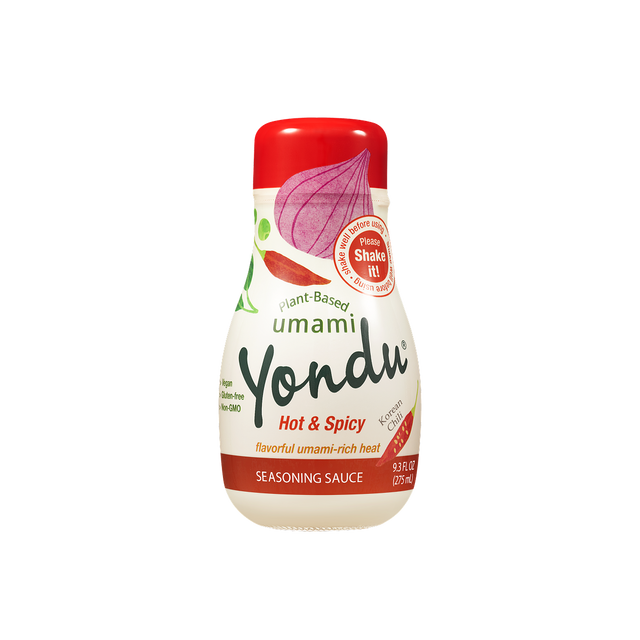
Yondu Spicy: the same savory depth with Korean chili heat. A few drops wake up ramen, stir-fries, and dressings.
FAQs
Questions We Hear a Lot
Is Yondu the same as MSG?
No. Yondu is a sauce made by fermenting soybeans and blending them with vegetable broth. Its umami comes from fermentation, the same way parmesan gets its umami from aging.
Isn't it just soy sauce?
No. Soy sauce has a strong soy flavor and a dark color, so you can always taste it in the dish. Yondu blends fermented soybeans with a vegetable broth, so it adds savory depth without the soy sauce taste, and it stays light in color. That's why it works where soy sauce would take over: a cream sauce, scrambled eggs, or a clear soup.
Is Yondu vegan?
Yes. Yondu Organic is vegan and contains soy.
Now You Know
Back to That Soup
Remember the soup that was salty enough but still missing something? Now you know what to reach for. Want seafood flavor? Fish sauce. A glossy coating? Oyster sauce. A broth base? Bouillon. Deep, savory flavor that lets the soup taste like itself? Just a splash of Yondu.
See the Yondu Collection →